
Welcome to Tormius Nexus
In today’s D7ART section, we introduce…
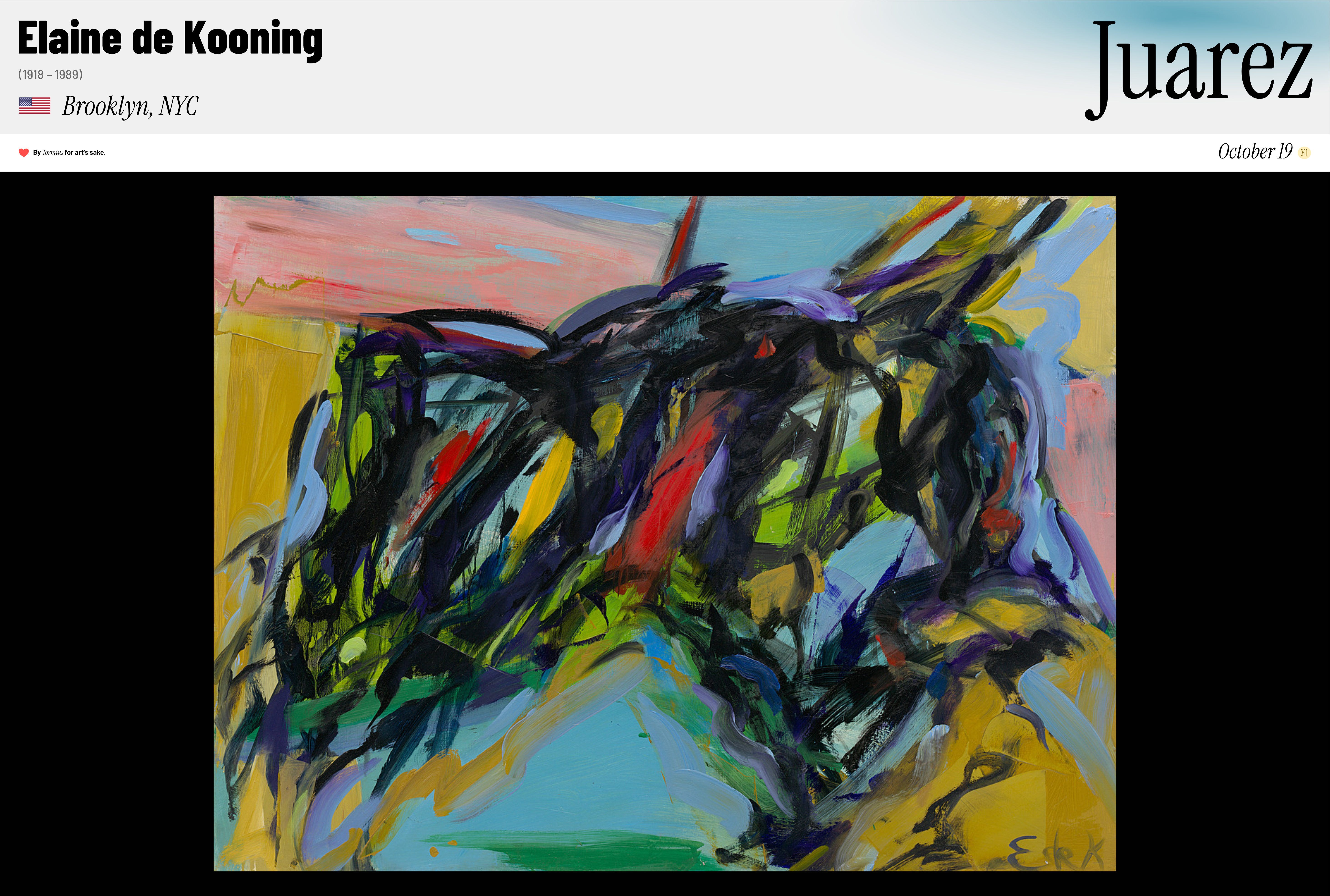
What:
The painting features bold, dynamic brushstrokes in a vibrant mix of colors—yellows, greens, purples, blues, and blacks—forming an abstract composition. The chaotic, layered strokes create an energetic and complex image, with the dark strokes in the center providing a sense of movement and tension. The surrounding colors contrast with the dark, central mass, giving the impression of a dynamic and possibly natural or emotional landscape. The title Juarez suggests a connection to the Mexican city of Ciudad Juárez, possibly reflecting the tumultuous nature of the city or its surrounding environment.
Who:
Elaine de Kooning, born in Brooklyn, New York, was a key figure in the Abstract Expressionist movement, yet she maintained a fluid style that often included references to figures and landscapes. She was known for her vibrant energy, both in her life and in her painting style, and her works often bridge the gap between pure abstraction and recognizable forms.
Where: Although de Kooning was based in New York, this painting’s title references Juárez, which may indicate her inspiration came from travels or reflections on the political and social atmosphere of the Mexican border city. Juárez has long been known for its vibrant culture but also for its challenges, which may be reflected in the tumultuous energy of the composition.
When: The painting likely dates from the later period of de Kooning’s career, possibly in the 1970s or 1980s, when her abstract works became more fluid and expressive. During this time, she explored different emotional landscapes and movements, producing works that conveyed intense feelings through color and brushwork.
How: Elaine de Kooning used oil or acrylic on canvas to create this abstract composition. Her brushstrokes are loose and expressive, a hallmark of her style, and the layering of colors creates a sense of depth and movement. Her technique, like other Abstract Expressionists, emphasizes the physical act of painting, with each stroke and gesture contributing to the overall energy of the piece.
Why: De Kooning’s work often explored complex emotions, human forms, and the energy of the natural world. Juarez could reflect a reaction to the vibrancy and struggles of the Mexican border town, capturing the sense of intensity, movement, and chaos associated with the city’s history. The abstract forms and dynamic colors allow for multiple interpretations, giving the viewer the freedom to connect emotionally with the piece.
This text was created with the help of ChatGPT-4o. If any information is not entirely correct, I would appreciate a revision to help me learn, thank you.
Feel free to share your thoughts by sending a reply and we can chat about it!